
Ethics Infinity
|
2025-08-21 16:11:19
The way we move, store, and manage goods has seen a dramatic shift, and it’s not just about keeping up with technology trends. It's about creating faster, safer, and more efficient operations that meet the growing expectations of modern logistics.
From automated picking systems to AI-powered warehouse operations, automation is no longer a futuristic concept. It’s here, it’s growing, and it’s transforming every layer of material handling and warehouse management.
We’re in the age of automation in material handling, where machines know what’s in stock before you do, robotic arms sort packages faster than you can blink, and AI decides the most efficient route for every movement inside the facility.
What once took a team of 10 now takes a system of sensors, software, and smarts, and that’s not scary. That’s strategic.
In this blog, we’ll explore how automation is reshaping the landscape, why it's a smart investment, and how you can adapt without disrupting your entire operation.
Why Automation Matters Now More Than Ever?
The global supply chain is moving faster than ever, and customers expect quicker, more accurate deliveries. Traditional warehouse systems, heavily dependent on manual labor and spreadsheets, struggle to keep up.
Here’s where automation in material handling steps in. It bridges the gap between growing demand and operational capability by:
- Reducing errors and delays
- Improving inventory visibility
- Increasing throughput without expanding space or workforce
In short, automation helps warehouses do more, and do it better, with less.
Core Technologies Driving Warehouse Automation
Warehouse automation isn’t a single piece of equipment; it’s a system of interconnected technologies that work together to streamline operations.
Here are some key components:
Automated Picking Systems
These systems use robots, shuttles, or guided vehicles to retrieve products accurately and quickly, reducing pick errors and increasing speed.
AI-Powered Warehouse Operations
AI analyzes warehouse data in real-time to optimize tasks like inventory allocation, restocking schedules, and order prioritization. Over time, it learns from patterns to become even more efficient.
Smart Logistics Solutions
These include advanced tracking systems, route optimization software, and real-time dashboards that give decision-makers better control and transparency.
Warehouse Technology Integration
Modern systems seamlessly connect with ERPs, WMS platforms, and IoT-enabled devices to centralize data, improve visibility, and support automated decision-making.
All of these systems work together to create a warehouse that’s more agile, responsive, and scalable.
The Human Impact of Automation
Contrary to popular belief, automation doesn’t replace people, it empowers them.
By offloading physically demanding, repetitive tasks to machines, your workforce can focus on high-value activities like:
Quality control
System monitoring
Problem-solving and process improvements
With a shift toward AI-powered warehouse operations, employees are given the tools and insights to work smarter, not harder.
Smarter, Not Harder: Benefits of Automation in the Warehouse
Let’s break it down. Why is everyone suddenly obsessed with warehouse automation? Because it works. Here’s how it’s changing the game:
Speed
Remember the rush during peak seasons? With automated picking systems, the time to locate and retrieve items drops drastically. Picking errors go down too, no more sending someone socks instead of soap.
Accuracy
Thanks to smart logistics solutions, the days of “Oops, wrong shipment” are fading. Barcode scanners, RFID tags, and AI algorithms work together to ensure that what’s ordered is what’s delivered.
Cost Efficiency
Initially, automation sounds expensive. But long term? It saves money. Lower labor costs, fewer errors, and reduced returns mean higher profits. That’s warehouse math.
Space Optimization
Warehouse technology like vertical lift modules or AS/RS systems maximizes every square inch. Who knew robots were so good at Tetris?
Workplace Safety
No more sprained ankles from climbing rickety ladders. Automated systems handle the heavy lifting, literally. Human workers stay safe, and HR breathes a sigh of relief.
What’s Holding Companies Back? (And Why You Shouldn’t Let It)
Let’s address the warehouse elephant in the room: resistance to change.
Common worries:
- "It’s too expensive."
- "My team won’t adapt."
- "It’s too technical for my setup."
These are valid concerns until you realize that most warehouse technology is modular, scalable, and increasingly user-friendly. You don’t need to go from zero to robo-arm overnight. Start small:
- Automate a single workflow.
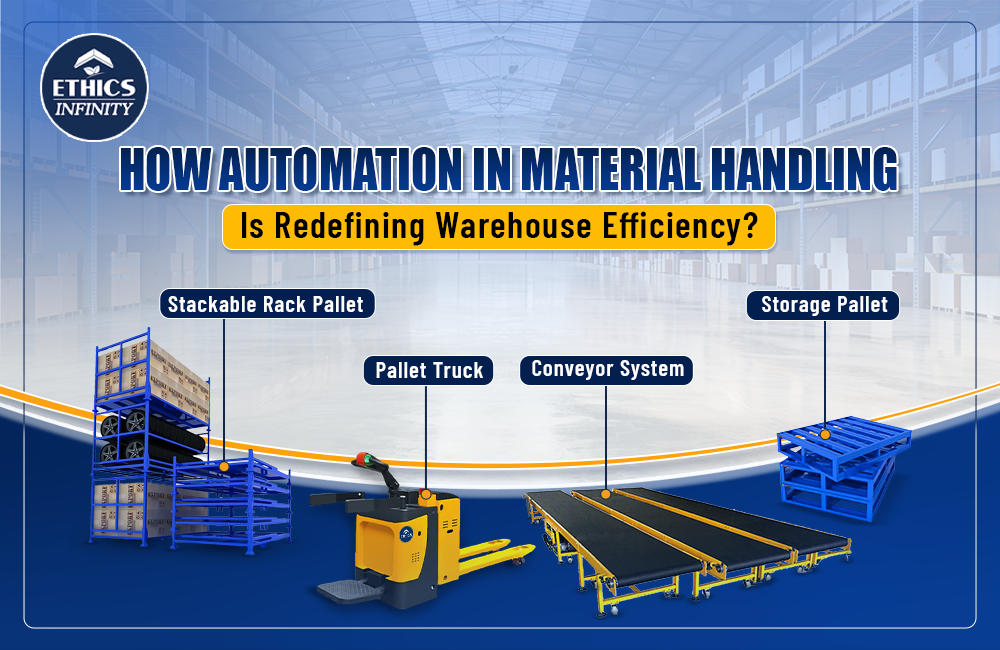
- Add a conveyor system.
- Test automated picking systems in high-volume zones.
Think of it like upgrading your phone, not scary, just smarter.
Ready to Automate Your Warehouse?
Your competitors are already investing. Your customers are expecting speed and accuracy. Your employees deserve safer work environments.
Warehouse technology is no longer experimental; it’s essential.
And the good news? You don’t have to do it alone.
Want to explore customized smart logistics solutions for your facility? Talk to our experts and see how AI-powered warehouse operations can boost efficiency, reduce errors, and future-proof your operations.
Call us today, and let’s take the next step together toward a smarter, faster, and more efficient warehouse.