
Ethics Infinity
|
2026-06-12 17:05:05
The dock shelter might not be the star of your facility, but it’s definitely the hardest working. Trucks come and go. The weather throws its worst. And in the middle of it all, your dock shelter quietly takes the hit. But here's the thing: not all dock shelters are built the same.
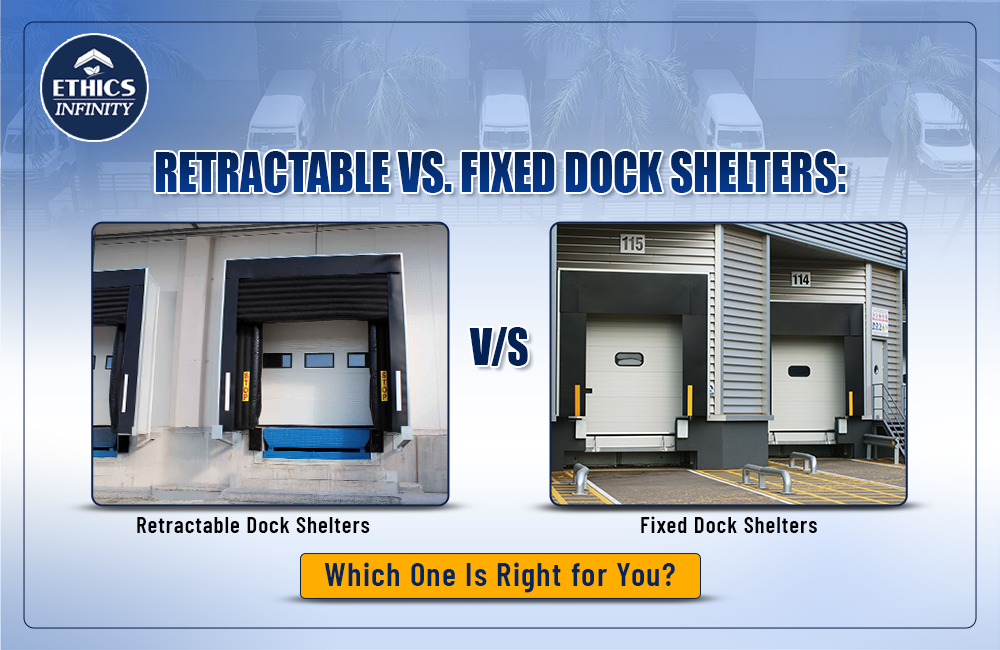
Some are permanent fixtures, standing firm year after year. Others are more flexible, adjusting with each vehicle, folding away when not in use. Which one works for your operation better? Fixed dock shelters or retractable dock shelters?
Consider the frequency of your truck visits and the volume of work your team handles. We can simplify it.
What Are Dock Shelters?
Dock shelters are protective structures installed around dock doors to seal the gap between the building and the truck. Their job? Minimizing interference from dust, wind, rain, or pests helps maintain temperature, energy efficiency, and safety indoors, while also enhancing productivity within the workflow.
The warehousing, cold storage, logistics, or manufacturing industries require an appropriate shelter setup to streamline work processes and reduce energy costs.
Fixed Dock Shelters: The Reliable Classic
What They Are:
Fixed dock shelters are permanent structures mounted around dock doors. They don’t move or adjust once installed; they’re always in place, ready to work.
Best For:
- Standardized fleets (same truck sizes)
- Facilities with steady docking patterns
- Situations where the safeguarding and insulating features are fully critical.
Pros:
- Sturdy and low-maintenance
- Excellent environmental sealing
- Extended lifespan
- Suitable for climate-controlled storage facilities
Cons:
- Not suitable for variable vehicle sizes
- Can be prone to damage from misaligned trucks
- Takes up more exterior space
Fixed dock shelters are like the solid coworker who never calls in sick. But they’re not the most flexible, so if your truck sizes vary, they might not always be the perfect fit.
Retractable Dock Shelters: The Flexible Option
What They Are:
Retractable dock shelters can slide back or fold away when not in use. They’re designed to move with trucks and reduce damage from accidental impacts.
Best For:
- Facilities dealing with mixed or irregular vehicle sizes
- High-traffic docks
- Warehouses with limited space
Pros:
- Reduces damage from truck impacts
- Adaptable to different truck sizes
- Compact when not in use
- Easier to replace/repair sections
Cons:
- May require more frequent maintenance
- Slightly higher upfront investment
- Not as tight a seal as fixed shelters in some cases
Retractable dock shelters are like the multitasker on your team, adaptable, quick to respond, and always ready for whatever rolls in next. If flexibility is your thing, this is worth a look.
Comparing Both Options: At a Glance
|
Feature |
Fixed Dock Shelters |
Retractable Dock Shelters |
|
Flexibility |
Low |
High |
|
Maintenance |
Low |
Moderate |
|
Space Efficiency |
Moderate |
High |
|
Impact Resistance |
Low |
High |
|
Ideal For |
Standard fleets, cold storage |
Mixed fleets, tight docks |
Cost Considerations:
It's not just about what you pay upfront; it's about what you save in the long run. Fixed shelters might cost less initially and require less upkeep. But if your operations demand adaptability, investing in a retractable dock shelter can prevent expensive downtime and repairs from truck damage.
Dock shelters manufacturers offer both types with customized specs. If you’re working with dock door widths, insulation requirements, or specific trailer sizes, it’s worth asking the right questions before signing off.
Energy Efficiency Matters:
A proper dock seal can drastically reduce energy loss. Poor sealing costs money, not just through heating or cooling leaks, but also through delayed loading times due to poor alignment or exposure. Whether you go fixed or retractable, the seal quality should always be top-tier.
Many dock shelter manufacturers now offer shelters with wear-resistant fabrics, pressure foam sides, and reinforced corners. These aren’t bells and whistles; they’re must-haves for any operation looking to scale efficiently.
Installation & Maintenance: What to Expect
- Fixed Shelters are easier to install and usually less expensive to maintain.
- Retractable Shelters: If you are working in a dusty and industrial setting, it is advisable to give moving parts on Retractable Shelters a check-up from time to time.
For both types, fabric wear, tears, and seal performance should be inspected regularly.
Key Questions to Consider Before Buying:
- What types and sizes of vehicles do we typically handle?
- How much space is available around the dock area?
- Are environmental controls (heat/cold) a priority?
- What’s our maintenance capacity or budget?
- How often do trucks dock daily?
You can choose between fixed and retractable dock shelters more clearly.
Real-Life Use Cases:
Cold Storage Facilities
→ Prefer fixed shelters for better insulation.
3PL Warehouses
→ Often choose retractable models for varying trailer sizes.
Retail Distribution Centers
→ Go hybrid: fixed for dock lanes with consistent deliveries, retractable for overflow bays.
Conclusion
Both fixed and retractable dock shelters serve different purposes, and both are essential tools when matched with the right workflow. While one offers you flexibility and impact protection, the other offers rigidity and reliability.
If you are still uncertain, a lot of dock shelter manufacturers provide on-site consultations. Gaining expert insight is beneficial before making any long-term commitments. After all, your dock doesn’t just move goods, it drives your entire operation.
Looking to upgrade your dock area with the right shelter system? Let’s find a solution that fits your trucks, your space, and your budget. Explore our range of high-performance dock shelters today, built for the real world, engineered to last. Get in touch today!